
Old Hattiesburg Zoo Maps (2021 to 2025) | 4 Maps and 0 Brochures
Old editions are organized here from 2021 to 2025. Use the table of contents to jump to a year and grab the PDF. For the current map guide, use the Hattiesburg Zoo map page.
Hattiesburg Zoo Map 2025
In 2025, Hattiesburg Zoo introduced two major developments. On May 24, the Serengeti Springs waterpark officially opened to the public, expanding the zoo’s recreational offerings. Earlier in the year, on January 31, the zoo signed a three-year Memorandum of Understanding with the University of Southern Mississippi, establishing a research partnership to support collaborative study and practice. These additions marked significant expansions in both visitor amenities and academic collaboration for the zoo.
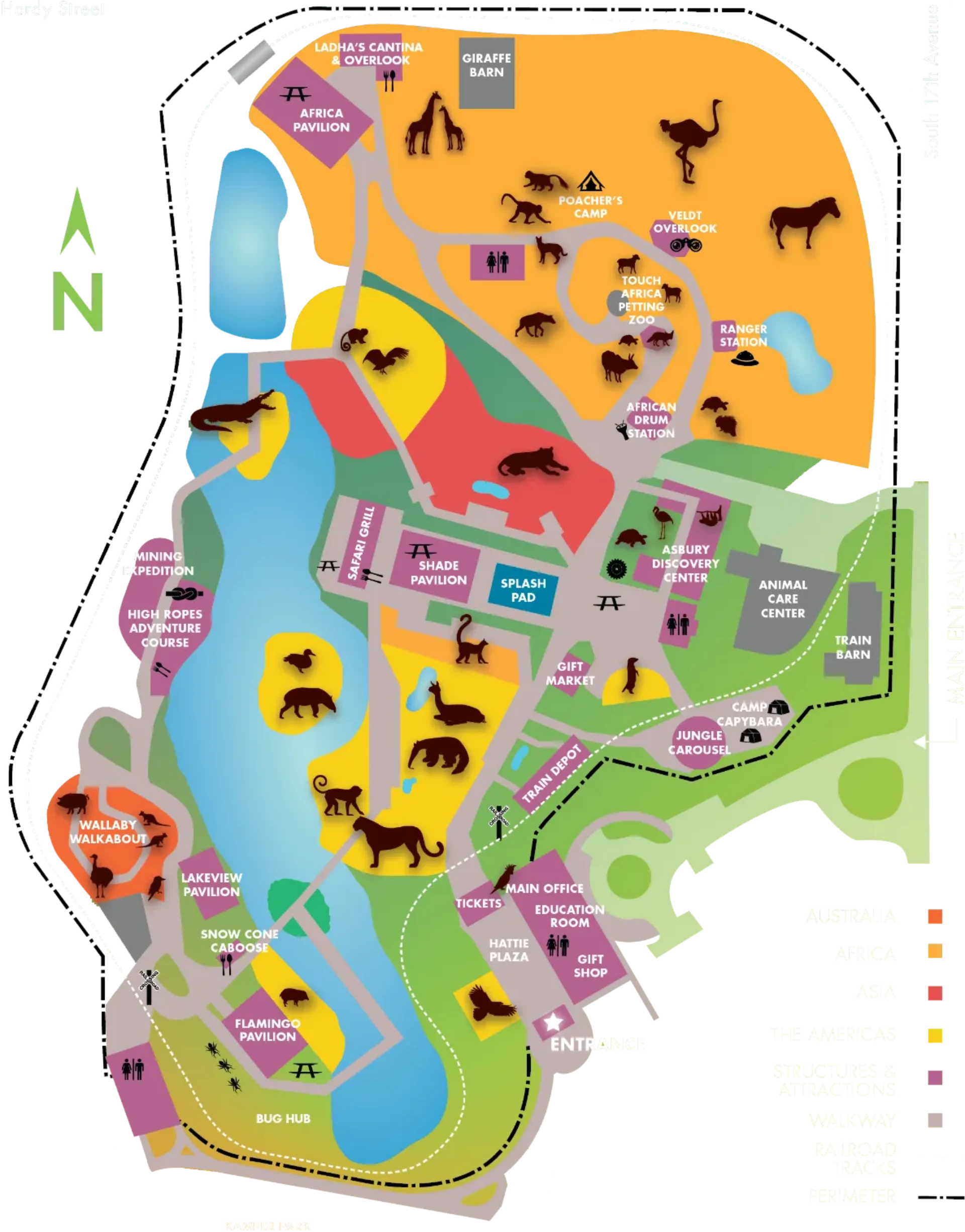
Printable Hattiesburg Zoo Map PDF 2025
Hattiesburg Zoo Map 2024

Printable Hattiesburg Zoo Map PDF 2024
Hattiesburg Zoo Map 2023

Hattiesburg Zoo Map 2021
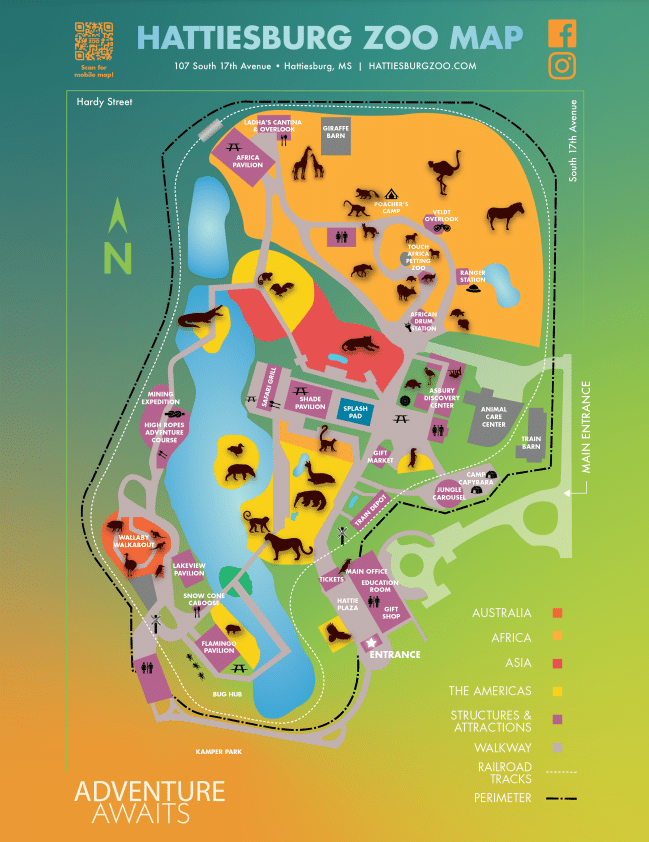
FAQ
How long does it take to walk through the Hattiesburg Zoo?
It takes about 1 to 2 hours to walk through the Hattiesburg Zoo. The compact layout makes it easy to see all exhibits in a short visit, while families attending train rides, playgrounds, or special programs may spend closer to half a day.
Is food allowed at the Hattiesburg Zoo?
Outside food and drinks are not allowed at the Hattiesburg Zoo. Guests can purchase meals, snacks, and beverages at on-site concessions. The zoo provides picnic areas outside the entrance for visitors who wish to bring their own food.
How many animals are in the Hattiesburg Zoo?
The Hattiesburg Zoo has more than 100 animals representing over 55 species. Its collection includes jaguars, tigers, sloths, lemurs, monkeys, reptiles, and giraffes. The zoo highlights wildlife from Asia, Africa, and the Americas in a compact and family-friendly setting.
Does the Hattiesburg Zoo have bears?
No, the Hattiesburg Zoo does not have bears. The zoo features animals such as jaguars, tigers, sloths, monkeys, wallabies, and giraffes. Its collection focuses on diverse species from around the world rather than large North American mammals like bears.
